Baby sleepwear may look simple, but choosing the right pajamas involves more than finding a soft fabric or a sweet print.
Fit, room temperature, garment condition and the sleep environment all matter. A sleeper should allow a baby to move comfortably without being excessively loose, while the space around them should remain clear, firm and appropriate for sleep.
Here are a few practical principles that can make bedtime feel a little simpler.
Why Snug-Fitting Sleepwear Matters
In the United States, children’s sleepwear in sizes larger than nine months must generally meet federal requirements by being either flame resistant or designed to fit closely to the body.
This does not mean pajamas should feel restrictive. Properly fitted sleepwear should still allow a child to stretch, kick, crawl and change positions comfortably.
The purpose of a close fit is to reduce the amount of loose fabric that could come into contact with an ignition source. Loose garments can allow more air to circulate around the fabric, which may cause fire to spread more quickly.
The U.S. Consumer Product Safety Commission recommends that parents follow the garment’s sizing and labeling instructions when selecting children’s sleepwear.
When checking the fit, look for sleepwear that:
- sits reasonably close to the body without squeezing;
- allows natural movement through the shoulders, hips and legs;
- does not have large areas of loose or hanging fabric;
- has sleeves and legs that do not cover the hands or feet unintentionally;
- matches the child’s current height and weight range.
Avoid intentionally purchasing sleepwear several sizes too large for a child to “grow into.” If a child falls between two sizes, use the brand’s height and weight chart and check how the garment fits through the torso, arms and legs.
Fit requirements for infant garments and children’s sleepwear can vary by size, so always keep the original labels and follow the instructions provided with the product.
A Snug Fit Should Still Be Comfortable
Snug-fitting does not mean tight-fitting to the point of leaving deep marks or limiting movement.
After dressing your baby, check that you can comfortably move their arms and legs and that the neckline sits flat without pressing against the neck. The fabric should stretch with normal movement and return to its shape without pulling excessively around the zipper, shoulders or diaper area.
A baby grows quickly, so fit should be checked regularly rather than only when the garment is first purchased.
It may be time to move to the next size when:
- the fabric remains stretched when the baby is resting;
- the neckline, cuffs or seams leave persistent marks;
- movement appears restricted;
- the zipper pulls or buckles;
- the garment no longer covers the torso and legs comfortably.
If the next size appears excessively loose, another style or brand with different proportions may provide a better fit.
Choosing Sleepwear for the Room Temperature
There is no single temperature or clothing combination that works for every baby. Room conditions, humidity, fabric weight and the baby’s individual comfort all make a difference.
The American Academy of Pediatrics advises that babies generally need only one more layer than an adult would wear comfortably in the same environment.
Rather than relying only on a baby’s hands or feet—which may naturally feel cooler—check the chest, upper back or back of the neck.
Possible signs that a baby may be too warm include:
- sweating;
- damp hair;
- a hot chest or upper back;
- flushed skin;
- rapid breathing or unusual restlessness.
If your baby feels hot or sweaty, remove a layer and reassess the room temperature. Indoor hats are generally unnecessary during sleep once a newborn has returned home from the hospital.
Avoid using heavy layers simply because a baby’s hands or feet feel cool. It is more useful to check the baby’s core temperature and overall comfort.
Every baby is different. Parents should speak with their pediatrician if they have questions about temperature regulation, prematurity, illness or another individual health concern.
Keep the Sleep Space Simple
Comfortable pajamas are only one part of safe sleep. The baby’s sleep environment matters just as much.
The American Academy of Pediatrics recommends placing babies:
- on their backs for every nap and nighttime sleep;
- on a firm, flat sleep surface;
- in a safety-approved crib, bassinet, portable crib or play yard;
- on a fitted sheet without additional loose bedding;
- in the parents’ room, but on a separate sleep surface, for at least the first six months when possible.
Keep pillows, quilts, loose blankets, toys, bumper pads and other soft objects out of the baby’s sleep area. These objects can create entrapment, suffocation and strangulation hazards.
If extra warmth is needed, use appropriate sleep clothing or a properly sized, non-weighted wearable blanket rather than placing a loose blanket in the crib.
Weighted sleepers, weighted swaddles and weighted blankets should not be used for infant sleep.
Avoid Overheating
Overheating is not always obvious, especially when a baby cannot tell us how they feel.
Start with light, breathable layers and adjust based on the room and the baby’s core temperature. More layers are not automatically better.
A practical bedtime check can be simple:
- Feel the baby’s chest or upper back.
- Check for sweating, dampness or flushed skin.
- Make sure the room feels comfortable to a lightly dressed adult.
- Remove a layer if the baby feels hot.
- Recheck the baby after the room temperature changes.
Fans, air conditioning and heating can change the temperature during the night, so the clothing that felt comfortable at bedtime may need to be reconsidered as the seasons change.
Inspect Sleepwear Regularly
Children’s sleepwear goes through frequent washing, stretching, crawling and everyday play. A quick inspection before dressing can help identify normal wear before it becomes a problem.
Check:
- whether the zipper opens and closes smoothly;
- whether the zipper pull and top stop remain secure;
- whether seams are separating;
- whether cuffs remain properly shaped;
- whether the fabric has developed holes or excessive thinning;
- whether labels remain legible;
- whether any decorative element has become loose.
Stop using a garment if a zipper, fastener or component is damaged or loose. Follow the washing and drying instructions on the care label, because excessive heat or unsuitable washing methods may affect fabric stretch, garment dimensions and overall condition.
Keep Sleepwear Away From Fire and Heat Sources
Even when sleepwear meets applicable requirements, it should always be kept away from open flames and high-heat sources.
Keep children away from:
- candles;
- fireplaces;
- matches and lighters;
- gas stoves;
- portable heaters;
- exposed heating elements.
No item of clothing should be treated as fireproof. Parents and caregivers should always follow the permanent labels and safety instructions attached to the garment.
What About Swaddling?
A regular baby sleeper and a swaddle serve different purposes.
If parents choose to swaddle, the baby should always be placed on their back. The swaddle should allow healthy movement around the hips and should not interfere with breathing.
Swaddling should stop as soon as a baby begins showing signs of attempting to roll. Babies can begin trying to roll earlier than expected, so development should be observed closely.
Do not place weighted objects inside a swaddle or use weighted swaddling products.
How CloudyCoo Approaches Baby Sleepwear Testing
At CloudyCoo, we believe softness should be supported by careful product review.
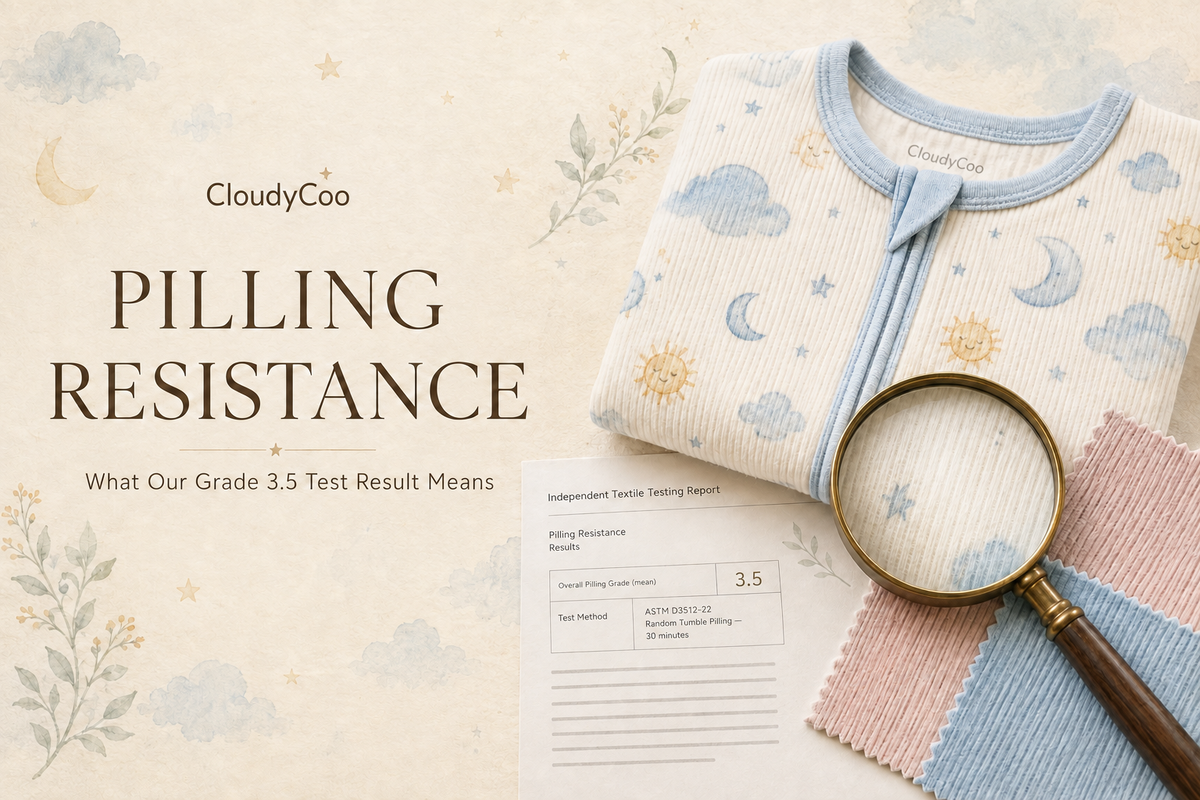
A submitted sample of CloudyCoo Baby Zippy style LC1001 was independently tested by Bureau Veritas Consumer Products Services. The report reviewed the sample against applicable U.S. children’s sleepwear and children’s product requirements within the identified testing scope, including garment sizing, labeling, flammability classification, small components and selected restricted substances.
The results relate specifically to the submitted LC1001 sample, tested materials and scope identified in Bureau Veritas report (6626)205-0865. They should not be interpreted as applying automatically to every product, material or future colorway.
Parents can read the complete summary in our CPSIA and independent laboratory testing article.
A Simple Bedtime Checklist
Before putting your baby down to sleep, take a moment to check:
- Is the sleepwear the correct current size?
- Can the baby move comfortably?
- Is the garment free from damaged or loose parts?
- Does the baby’s chest or upper back feel comfortably warm rather than hot?
- Is the baby placed on their back?
- Is the sleep surface firm, flat and clear?
- Are loose blankets, pillows, toys and other soft objects outside the crib?
- Is the sleep area away from flames and heat sources?
Baby sleepwear does not need to be complicated. A suitable fit, light and thoughtful layering, regular garment checks and a clear sleep space can help parents create a more considered bedtime routine.
Sources and Further Reading
- U.S. Consumer Product Safety Commission: Children’s Sleepwear Safety
- U.S. Consumer Product Safety Commission: Infant Garments and Tight-Fitting Sleepwear
- American Academy of Pediatrics: How to Keep Your Sleeping Baby Safe
This article provides general educational information and is not a substitute for medical advice or the instructions supplied with a specific product. Parents should consult a pediatrician regarding individual health, development or sleep concerns.